THREE:But whatever tendency might have been arising in theory or in practice about this time to mitigate the severity of our laws was destined to receive a dead check from the publication in 1784 and 1785 respectively of two books which deserve historical recollection. The first was Madan¡¯s ¡®Thoughts on Executive Justice,¡¯ in which the author, adopting Beccaria¡¯s principle of the certainty of punishment as the best check on crime, advocated an unflinching carrying out of the laws as they stood. ¡®It was,¡¯ says Romilly, ¡®a strong and vehement censure upon the judges and the ministers for their mode of administering the law, and for the frequency of the pardons which they granted. It was very much read, and certainly was followed by the sacrifice of many lives.¡¯
FORE:They who have thought that the criminal¡¯s intention was the true measure of crimes were in the wrong. For the intention depends on the actual impression of things upon a man, and on his precedent mental disposition, things which vary in all men and in each man, according to the very rapid succession of his ideas, his passions, and his circumstances. It would, therefore, be necessary to form not only a particular code for each citizen, but a fresh law for every crime. Sometimes with the best intentions men do the greatest evil to society; and sometimes with the very worst they do it the greatest good. From the simple consideration of the truths hitherto demonstrated it is evident that the object of punishment is neither to torment and inflict a sensitive creature nor to undo a crime already committed. Can he, whose function it is, so far from acting from passion, to tranquillise the private passions of his fellows, harbour in the body politic such useless cruelty, the instrument either of furious fanatics or of weak tyrants? Shall perchance the shrieks of an unhappy wretch call back from never-receding time actions already executed? The object, therefore, of punishment is simply to prevent the criminal from injuring anew his fellow-citizens, and to deter others from committing similar injuries; and those punishments and that method of inflicting them should be preferred which, duly proportioned to the offence, will produce a more efficacious and lasting impression on the[166] minds of men and inflict the least torture on the body of a criminal.
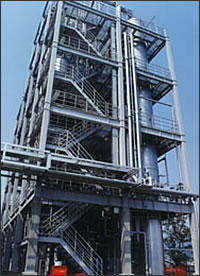
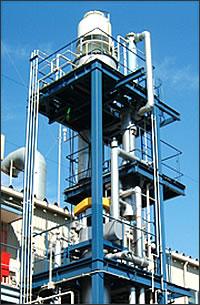
Methanol refinement systems, amyl alcohol refinement systems, ethanol refinement systems, hexanol distillation systems, propanol refinement systems, cyclohexanol distillation systems, isopropanol dehydration systems, ethylene glycol recovery systems, and butanol distillation systems.
FORE:If it be said that a second conviction makes it necessary for society to protect itself by stronger measures against a member who thus defies its power, it may be asked whether this is not an application of exactly the same reasoning to the crimes of individuals, which as applied to the crimes of all men generally led our ancestors so far astray in the distribution of their punishments. Nothing could have been more plausible than their reasoning: ¡®The punishment in vogue does not diminish the crime, therefore increase the punishment.¡¯ But nothing could have[92] been less satisfactory than the result, for with the increase of punishment that of crime went hand in hand. The same reasoning is equally plausible in the case of individuals, with the same perplexing question resulting in the end: ¡®How comes it that, in spite of the threatened greater punishment, the majority of criminals are yet old offenders?¡¯The mind of man offers more resistance to violence and to extreme but brief pains than it does to time and to incessant weariness; for whilst it can, so to speak, gather itself together for a moment to repel the former, its vigorous elasticity is insufficient to resist the long and repeated action of the latter. In the[174] case of capital punishment, each example presented of it is all that a single crime affords; in penal servitude for life, a single crime serves to present numerous and lasting warnings. And if it be important that the power of the laws should often be witnessed, there ought to be no long intervals between the examples of the death penalty; but this would presuppose the frequency of crimes, so that, to render the punishment effective, it must not make on men all the impression that it ought to make, in other words, it must be useful and not useful at the same time. And should it be objected that perpetual servitude is as painful as death, and therefore equally cruel, I will reply, that, taking into consideration all the unhappy moments of servitude, it will perhaps be even more painful than death; but whilst these moments are spread over the whole of a lifetime, death exercises all its force in a single moment. There is also this advantage in penal servitude, that it has more terrors for him who sees it than for him who suffers it, for the former thinks of the whole sum-total of unhappy moments, whilst the latter, by the unhappiness of the present moment, has his thoughts diverted from that which is to come. All evils are magnified in imagination, and every sufferer finds resources and consolations unknown to and unbelieved in by spectators, who substitute their own sensibility for the hardened soul of a criminal.
Hexane distillation systems, tall oil distillation systems, benzene distillation systems, lubricating oil refinement systems, xylene-free distillation systems, low-boiling gas distillation systems, ethylbenzene recovery systems, fusel oil distillation systems, naphthalene distillation systems, propylene recovery systems, and turpentine oil distillation systems.
FORE:CHAPTER XXIII. PROPORTION BETWEEN CRIMES AND PUNISHMENTS.
Ether distillation systems, camphor distillation systems, epichlorohydrin distillation systems, aniline distillation systems, dioxane refinement systems, acetonitrile distillation systems, furfural refinement systems, formalin distillation systems, cyclohexane distillation systems, monoethanolamine rectification systems, polyglycol ether distillation systems, dimethylformamide recovery systems, acrylic glycol ether distillation systems, acrylonitrile refinement systems, acetone recovery systems, pyridine distillation systems, methyl ethyl ketone recovery systems, picoline distillation systems, methyl isobutyl ketone recovery systems, and acetaldehyde recovery systems.